Dimitrie Cantemir’s Melodies Echo Through

he evening of August 11, 2026, the Derya Türkan Ensemble hosted the "Dimitrie Cantemir" concert at the 16th-century Vlachsaray Panagia Paramythia Church—an iconic symbol of Istanbul’s multi-layered cultural heritage. Featuring musicians Serkan Halili and Nikos Papageorgiou alongside guest artists Dilek Türkan and Çağlar Fidan, the performance brought Cantemir's Ottoman-era masterpieces back to life while highlighting the power of music in preserving historic sites of memory.
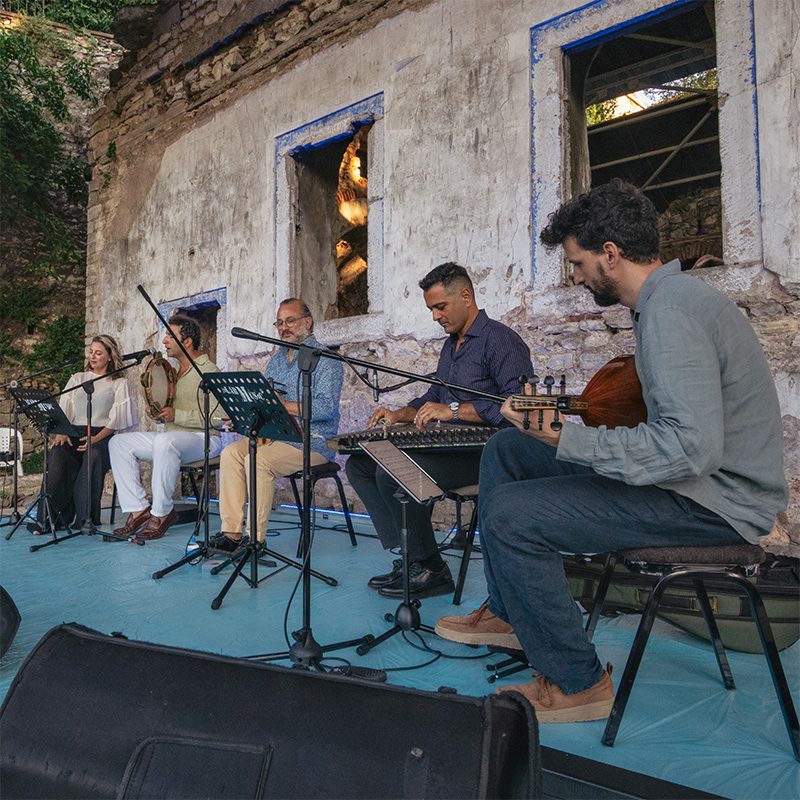
Derya Türkan Ensemble at Vlachsaray Panagia Paramythia Alongside Cantemir's masterpieces, the performance also brought the audience pieces by other pivotal figures in music history, such as Ali Ufkî Bey (Albert Bobowski). In the courtyard filled with hundreds of enthusiastic Istanbulites, a half-century-long silence was broken by notes belonging to centuries past.

Speaking before the concert, Laki Vingas, President of the Foundation of the Vlachsaray Panagia Greek Orthodox Church, stated that Cantemir carried the cultural richness of Ottoman Istanbul into the future through his compositions, adding: "Cantemir reminds us of the universal language of music that transcends boundaries and brings people together." Expressing that their greatest wish is the complete restoration and revival of the church—silent since 1974—and its return to society, Vingas hoped this concert would be remembered as a testament to the respect for Istanbul's shared memory and cultural heritage.

Vingas further noted that the historical walls, which once echoed with the prayers of the Greek community, were brought back to life through the universal language of music. As the ensemble performed, the artists drew attention to the powerful role of music in preserving and keeping historical memory sites alive.
Program Repertoire

  • Sirba & Nihavend Saz Semai: Sirba is a fast, traditional Moldavian folk dance. In this performance, it is paired with Prince Dimitrie Cantemir’s four-movement classical instrumental work (Nihavend Saz Semai), bridging Moldavian folk melodies with Ottoman classical music through the modal framework of the Nihavend makam.
  • Bûselik Ağır Semai - Recep Çelebi: Bûselik Ağır is a classical vocal masterpiece composed by Çömlekçizâde Recep Çelebi (d. 1701), an important late 17th-century Ottoman composer. An ağır semâî is a slow, dignified classical Ottoman vocal composition performed after the main beste movement in a formal concert sequence (fasıl).
  • Acemaşiran Peşrev - Angeli: Acemaşiran Peşrevi by Angeli is a classic 17th-century instrumental overture in Ottoman classical music. Angeli was a prominent Greek Ottoman tanbur virtuoso and court composer active in Istanbul during the second half of the 17th century.
  • Peyk-i Sefâ Saz Semai - Petraki: An 18th-century instrumental masterpiece composed by Petraki in classical Ottoman music. Peyk-i Sefâ translates literally from Ottoman Turkish as "Messenger of Joy" or "Courier of Delight." Petraki was a prominent Greek Ottoman composer and musician who contributed significantly to the 18th-century classical repertoire of Istanbul.
  • Rast İlahi & Nişaburek Semai - Ali Ufkî Bey: A paired vocal-instrumental arrangement preserved by Ali Ufkî Bey (Albert Bobowski, 1610-1675), a Polish-born musician and scholar at the Ottoman court in Istanbul. He compiled Mecmûa-i Sâz ü Söz, the earliest major manuscript to record 17th-century Ottoman music using Western staff notation.
  • Uzzâl Peşrev I & II and Bûselik Aşiran Saz Semai: Three instrumental classical compositions written by Dimitrie Cantemir (1673-1723), the Prince of Moldavia, scholar, and composer who played a pivotal role in documenting and shaping 17th–18th century Ottoman classical music.
  • Çıkalım Sayd ü Şikâre - Tanburi Mustafa Çavuş: An 18th-century vocal piece (şarkı) composed by Tanburî Mustafa Çavuş (c. 1700-1770), a tanbur virtuoso and prolific song composer of the Ottoman classical era. Sayd ü şikâr translates to "hunting and game." Metaphorically, the lyrics frame a walk through nature or Istanbul's seaside neighborhoods (referencing Tarabya along the Bosphorus) as a pursuit of the beloved's heart.
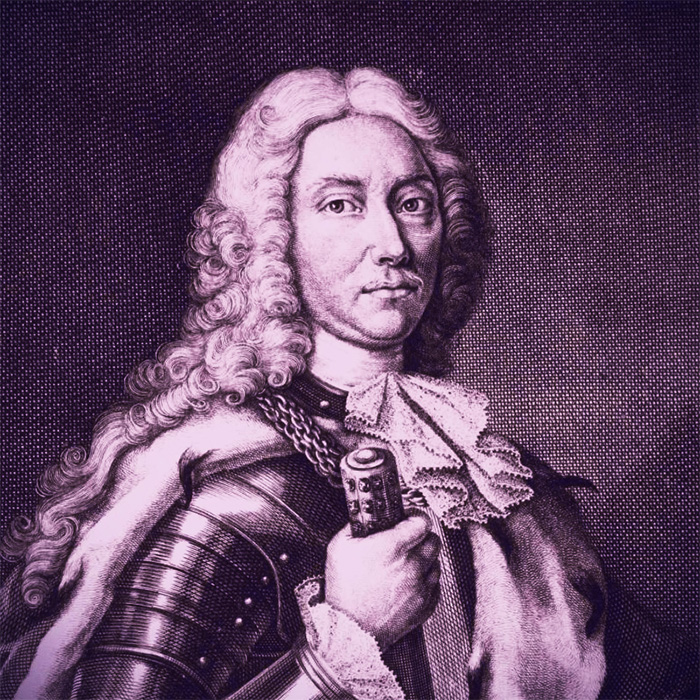
Dimitrie Cantemir Portrait

Dimitrie Cantemir (1673–1723) stands as one of the most remarkable intellectual figures of the early modern era. A prince, historian, linguist, and musical theorist, his multifaceted legacy bridges Western European scholarship and Eastern Mediterranean traditions.

Early Life & Multilingual Heritage

Born in Silişteni, Moldavia, to Prince Constantin Cantemir and Ana Bantăș, Cantemir grew up in a household that prioritized classical education. Guided by prominent scholars such as John Komnenos Molyvdos, he mastered Latin and Ancient Greek at an early age.

Due to his broad international standing and the wide circulation of his scholarly works, Cantemir’s name was adapted across several distinct linguistic traditions and regional historical records. As a result, his legacy is documented under various cultural contexts throughout Europe and the Mediterranean:

  • Romanian / Latin: Dimitrie Cantemir (Demetrius)
  • Turkish: Dimitri Kantemiroğlu
  • Greek: Δημήτριος Καντιμήρης (Dēmētrios Kantimērēs)
  • Russian: Dmitri Konstantinovich Kantemir
  • Polish: Dymitr Kantemir

The Constantinople Years & Linguistic Mastery

Between 1687 and 1710, Cantemir spent extended periods in Constantinople (modern-day Istanbul) as an envoy and royal hostage. Living in his palace near the Phanar district, he immersed himself in the intellectual life of the Ottoman capital, studying at the Patriarchal Greek Academy. A true polyglot capable of speaking and writing eleven languages, Cantemir became an expert in Oriental studies, philosophy, and history.

During his exile in the imperial capital, he authored pivotal works, including:

  • History of the Growth and Decay of the Ottoman Empire: His widely translated historical masterwork.
  • Descriptio Moldaviae (1714): A comprehensive geographical and cultural study written for the Royal Academy in Berlin.
  • A Hieroglyphic History (1705): Recognized as the first Romanian novel, utilizing mythological allegory to depict regional political rivalries.

Impact on Ottoman Musical History

Cantemir’s most enduring contribution to Istanbul's cultural heritage lies in his musicological achievements. In his seminal treatise, Edvâr-ı İlmi’l-Mûsıkî (The Book of the Science of Music), presented to Sultan Ahmed III in the early 18th century, he introduced a unique alphabetical notation system derived from the Ottoman Turkish script.

While his custom notation was not widely adopted in later centuries, it served a monumental historical purpose:

  • Preserving Lost Masterpieces: He transcribed and saved over 350 classical instrumental compositions (peşrevs and saz semais) from the 16th and 17th centuries that would otherwise have been lost to oral tradition.
  • Original Compositions: The manuscript preserves several of Cantemir’s own original instrumental compositions, a number of which remain staples of the Turkish classical repertoire today.

Legacy in Modern Istanbul

Today, Cantemir's historical ties to the city are honored at one of his restored residential properties in Istanbul, which operates as a museum celebrating his contributions to shared European and Ottoman heritage.

Dimitrie Cantemir's Compositions